
If you’re recovering from a body contouring procedure or planning one in Miami, you’ve probably heard your surgeon mention lymphatic drainage somewhere in the recovery plan.
Now you’re wondering: is it really needed, when do I start, and how do I make sure I’m doing it right?
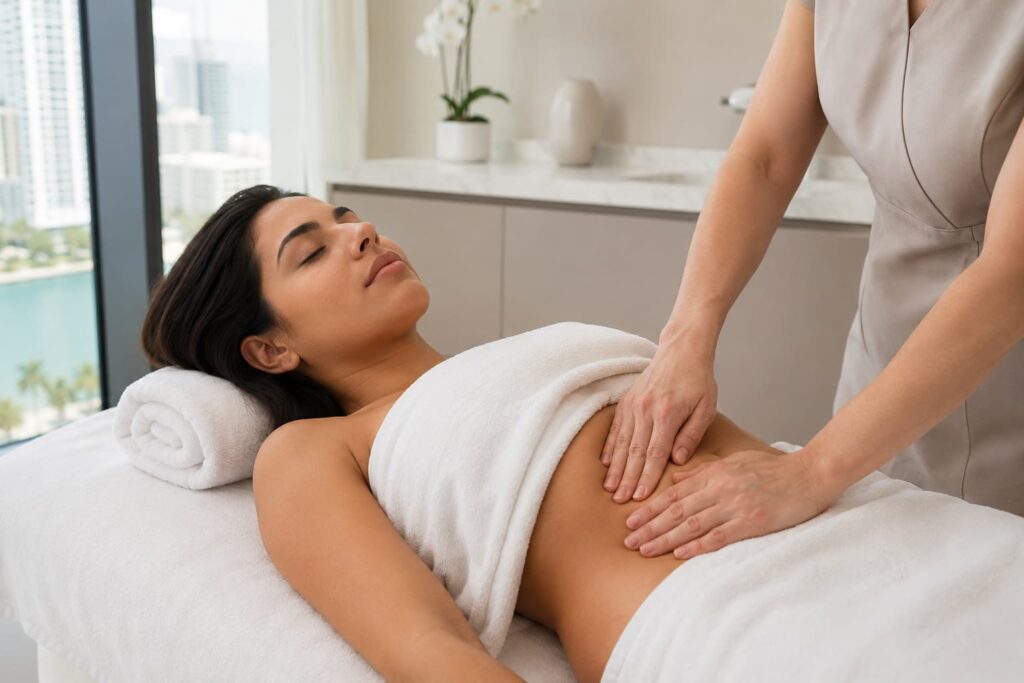
Lymphatic drainage after surgery is a gentle massage technique that helps move trapped fluid out of swollen tissue and back into the lymphatic system, where the body can clear it. Done correctly and on the right timeline, it speeds visible deflation, lowers the risk of complications, and protects your final result.
What is lymphatic drainage after surgery?
Manual lymphatic drainage (MLD) is a light-pressure, rhythmic massage that stimulates the network of vessels and nodes responsible for clearing fluid and waste from your tissues. According to the Cleveland Clinic, the technique uses strategic strokes that move excess fluid from swollen areas toward working lymph nodes so the body can reabsorb it.
After surgery, the picture changes. Your tissues are healing from a controlled trauma, some lymphatic channels may have been disrupted during the procedure, and the system is suddenly handling far more fluid than usual.
While the strongest clinical evidence for MLD comes from lymphedema research, including a 2022 systematic review published in Clinical Breast Cancer, the same mechanism (mobilizing trapped fluid toward functioning nodes) is what surgeons rely on after cosmetic procedures.
What happens if you skip it: the real risks
Skipping post-op drainage is one of the most common reasons patients feel disappointed at the 3-month mark.
Without it, four things tend to happen:
- Prolonged swelling and tightness that can last months longer than necessary, masking your real contour.
- Fibrosis (hardened scar tissue under the skin), which can leave bumps, ripples, and uneven texture once the acute swelling phase passes.
- Higher seroma risk, meaning fluid pockets that may need to be drained with a needle in office.
- Slower return to daily life, since persistent edema affects mobility, sleep, and comfort in clothing.
Post-operative recovery research, summarized by the American Society of Plastic Surgeons, consistently identifies swelling management as one of the most influential factors in long-term aesthetic outcomes after liposuction, BBL, and abdominoplasty.
When to start: timeline by procedure
Timing matters more than most people realize. Start too early and you can disrupt healing; wait too long and the swelling has already organized into fibrosis.
Here’s the general guide most board-certified plastic surgeons follow:
| Procedure | When to start MLD | Frequency (first 2–3 weeks) | Typical total sessions |
| Liposuction / BBL | 48–72 hours post-op | 3–5x per week | 8–12 |
| Tummy tuck (abdominoplasty) | 5–7 days post-op | 2–3x per week | 10–15 |
| Mommy makeover | 5–7 days post-op | 2–3x per week | 10–15 |
| Breast augmentation or lift | 7–10 days post-op | 1–2x per week | 4–6 |
| Facelift | 3–5 days post-op | 2x per week | 4–6 |
These windows assume an uncomplicated recovery, and surgeon clearance always comes first. Patients having a BBL in Miami or a mommy makeover often benefit from front-loading sessions in the first two weeks, when fluid mobilization makes the biggest visual difference.
Types of lymphatic drainage: which one is right for you?
Not every drainage session is the same. Three approaches you’ll find in Miami:
- Vodder method: The original European technique. Very light, rhythmic strokes. Suited for generalized edema and patients with sensitive recovery.
- Brazilian-style MLD: Firmer, more directional pressure combined with shaping movements. Considered the gold standard for body contouring recovery because it pairs lymph stimulation with tissue mobilization, helping prevent fibrosis along liposuction cannula paths.
- Mechanical pressotherapy: Pneumatic boots or sleeves that compress the limbs in sequence. Useful as a complement between manual sessions, though it does not replace hands-on MLD for surgical patients.
For most Latina patients recovering from BBL, liposuction, or mommy makeover, Brazilian-style drainage tends to deliver the most visible results. It’s the same technique many patients already know from family abroad, and it’s the one we coordinate at A&E Plastic Surgery.
How to do it right: your 6-step recovery framework
A productive recovery is built on habits that work together, not on drainage alone:
- Get surgeon clearance first. Confirm your start date and any restrictions before booking the initial session.
- Choose a certified MLD therapist with documented post-surgical experience (credentials covered in the next section).
- Start within your procedure window. Use the timing table above and avoid delays past the first week.
- Wear your compression garment consistently. Most surgeons recommend 23 hours a day for the first 4 to 6 weeks.
- Hydrate and walk early. Aim for 8 to 10 cups of water daily and take short, gentle walks starting on day 2.
- Sleep in the position your surgeon prescribes (back with a slight incline for abdominal procedures, side or face-down for BBL).
⚠️ Important: These steps apply to patients recovering from elective cosmetic surgery with no active medical complications. Anyone with a history of blood clots, deep vein thrombosis, active infection, congestive heart failure, kidney failure, or untreated cancer should consult their surgeon before starting MLD.
How to find a certified MLD therapist in Miami
Credentials separate trained therapists from anyone offering “lymphatic massage” on Instagram. When choosing yours, verify:
- Certification from a recognized program (Vodder, Klose, Norton, or a Brazilian post-surgical specialization)
- Hands-on experience with body contouring patients
- Willingness to coordinate notes with your surgical team
- A licensed clinical setting with sterile practices
- Transparent per-session pricing, with no pressure to prepay large packages
Red flags include therapists without formal training, treatments performed outside a licensed clinic, and anyone promising dramatic contouring results from a single session. Recovery is measured in weeks, not appointments.
Why patients in Miami choose A&E Plastic Surgery for surgery and recovery
At A&E Plastic Surgery, recovery planning starts at your first consultation, not after you leave the operating room. Our Miami-based team speaks English, Spanish, and Portuguese, so your post-op instructions are never lost in translation. We coordinate with certified MLD therapists across South Florida who specialize in post-surgical body contouring, and your drainage schedule, compression timeline, and follow-up appointments are mapped out before your procedure date.
For Latina patients who travel into Miami for surgery, this integrated recovery roadmap removes guesswork at the moment you need it least. Schedule your consultation to plan your procedure and recovery together, from day one.