
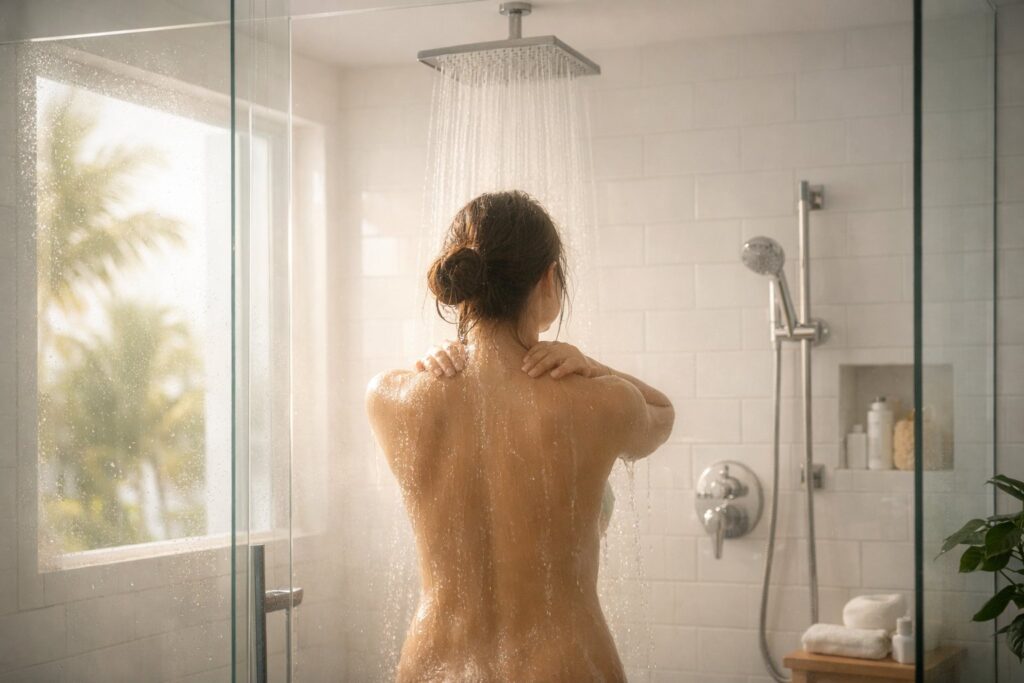
One of the most common questions after plastic surgery seems simple, yet it can cause a lot of uncertainty: when can I shower normally again?
After a procedure, everyday activities — like taking a shower — require a few extra precautions. Many patients worry about getting their incisions wet, disturbing their dressings, or doing something that could interfere with the healing process.
The good news is that showering after plastic surgery is usually allowed within a few days, as long as some basic guidelines are followed. Understanding how the process of showering after plastic surgery works can help make your recovery smoother and more comfortable.
In this guide, you will learn when it is safe to shower, how to do it properly, and which precautions can help protect your results.
How soon can you shower after plastic surgery?
The time to return to showering varies depending on the procedure performed, but in most cases patients can shower between 24 and 72 hours after surgery.
This timeframe depends on several important factors:
- the type of surgery performed
- the presence of surgical drains
- the type of dressing used
- your surgeon’s specific instructions
Less invasive procedures often allow patients to shower sooner. Surgeries with larger incisions — such as tummy tuck or BBL — may require a bit more caution during the first few days.
For this reason, when it comes to showering after plastic surgery, the most important rule is always to follow your surgeon’s instructions. Every surgery and every patient has unique recovery needs.
Why showering after plastic surgery requires special care
Showering after surgery is not exactly the same as your usual daily shower. A few precautions help protect your body while it is still healing.
The main reasons to be careful with showering after plastic surgery include:
- Protecting the incisions: Incisions need to remain clean and protected while they heal.
- Preventing infection: Keeping the area clean helps reduce the risk of bacteria.
- Avoiding pressure on the surgical area: The shower water should not hit the incisions directly.
- Managing swelling: Very hot water can increase swelling during the first few days.
Following these simple guidelines can help ensure a smoother and more comfortable recovery.
Your first post-surgery shower: Step by Step
Once your surgeon clears you to shower, here’s how to do it safely:
- Prepare everything before getting into the shower: Keep towels, soap, and clean clothes nearby so you don’t have to move around too much afterward.
- Keep it short: Your first showers should last no more than 5 to 7 minutes. Standing too long under hot steam can cause dizziness, which is common during the early recovery period.
- Use lukewarm water — never hot: Hot water dilates blood vessels and can increase swelling and discomfort around the surgical area.
- Adjust the shower pressure: If your showerhead has adjustable settings, choose the gentlest one. Strong water pressure hitting a recent incision can cause problems, even after initial healing.
- Protect your incisions if needed: Depending on your stage of recovery, your surgeon may recommend covering incisions with a waterproof dressing during the shower. Always follow your surgeon’s specific instructions.
- Use a mild antibacterial soap: The same product you used before surgery is usually fine — just avoid applying it directly over the incisions.
- Don’t rub your skin: When drying off, gently pat your skin with a towel instead of rubbing, especially near the incision areas.
- Let the area air dry: After carefully drying your body, allow the incision area to air dry before putting on compression garments or clothing. In Miami, air conditioning often helps speed up this process.
Showering after different plastic surgery procedures
While the general recommendations for showering after plastic surgery are similar, certain procedures require extra precautions during recovery.
The location of the incisions, the extent of the surgery, and the presence of compression garments or drains can all influence how patients should approach their first showers.
Understanding these differences can help patients feel more confident and avoid unnecessary stress during the healing process.
Breast surgery
Patients who undergo breast augmentation, breast lift, or breast reduction are usually able to shower within a few days after surgery, depending on their surgeon’s instructions.
When showering after breast surgery, it’s important to avoid letting strong water pressure hit the chest directly, especially over the incision areas. Instead, allow water to flow gently over the shoulders and upper body.
Patients should also be careful when removing and reapplying surgical bras or dressings, as these are important for supporting the breasts during the early stages of healing. Moving slowly and keeping showers short can help reduce discomfort and prevent strain on the chest muscles.
Liposuction
After liposuction, showering often becomes part of the normal recovery routine fairly quickly. In fact, the first shower can help remove antiseptic solutions or surgical markings left on the skin after the procedure.
Even so, patients should still be gentle with the treated areas. Liposuction can cause temporary swelling, bruising, and sensitivity, so the skin may feel tender during the first few days.
It is also common for patients to wear compression garments after liposuction. These garments should only be removed briefly for showering and then placed back on as instructed by the surgeon to help control swelling and support healing.
Tummy Tuck
A tummy tuck (abdominoplasty) usually requires a bit more caution when it comes to showering after plastic surgery. Because the abdominal incision is larger and located in a central area of the body, patients may need assistance during their first shower.
Many tummy tuck patients also have surgical drains during the early days of recovery. These drains must be handled carefully while showering to avoid pulling or dislodging them.
Patients should avoid standing fully upright if their surgeon has advised a slightly bent posture during recovery. Moving slowly and supporting the abdominal area can make the process more comfortable.
BBL (Brazilian Butt Lift)
Patients who undergo a Brazilian Butt Lift (BBL) must be particularly mindful of pressure on the buttocks during recovery. Since the transferred fat cells are delicate during the healing phase, avoiding pressure on the area is an important part of protecting the final results.
When showering after a BBL, patients should be cautious about how they stand, move, and dry themselves afterward. It is often recommended to hold onto a stable surface or have assistance during the first shower to reduce the risk of slipping or sudden movements.
Patients should also avoid sitting directly on the buttocks while drying off or getting dressed. Taking a few extra minutes to move slowly and carefully can help ensure a smoother recovery.
When Is It Safe to Take a Bath or Swim?
A common question during recovery is the difference between taking a shower and being submerged in water.
While showering after plastic surgery is often allowed within a few days, activities that involve soaking the body in water usually require a longer waiting period.
Here is what patients should generally expect:
Bathtubs (soaking baths)
Patients are usually advised to wait at least 2 to 3 weeks, or until their surgeon confirms it is safe. Soaking the body in water can expose healing incisions to bacteria, even if the skin appears closed on the outside.
Swimming pools
The typical waiting period is around 4 to 6 weeks, depending on the procedure and how well the incisions are healing. Chlorinated pool water can irritate healing scars, and the physical activity involved in swimming may put strain on the surgical areas.
Beach and ocean
The recommended timeline is usually similar to pools, typically 4 to 6 weeks. In addition to saltwater exposure, factors like sand, sun, and heat can affect the healing process. It’s also important to remember that fresh scars are extremely sensitive to sunlight. Using sunscreen with SPF 50 or higher is strongly recommended once beach activities are allowed.
Jacuzzi and hot tubs
These are often the most restrictive environments during recovery. The combination of hot water, jets, and a higher risk of bacteria means patients usually need to wait longer before using them. Always speak with your surgeon before entering a jacuzzi or hot tub after surgery.
Warning signs: When to call your surgeon immediately
The vast majority of patients recover very well after plastic surgery. However, it’s important to recognize when something may not be right — and not wait to reach out to your surgeon.
Pay attention if, after showering or during your recovery, you notice any of the following:
- Fever above 100.4°F (38°C), especially during the first few days
- Redness, warmth, or increasing swelling around the incision
- Yellow, green, or foul-smelling drainage coming from the surgical area
- An incision opening, even partially
- Pain that gets worse instead of improving over time
These signs are not meant to cause panic — they’re simply reminders that you have a medical team supporting you.
At A&E Plastic Surgery, we would rather receive ten unnecessary calls than have a patient at home feeling worried and unsure about what to do. Your recovery is our responsibility too.
Have more questions about your recovery? We’re here for you.
Recovering from plastic surgery comes with its own particularities — and you deserve a team that understands that, speaks your language, and truly supports you throughout your recovery.
At A&E Plastic Surgery, we provide care in English and Spanish, with a team experienced in supporting patients from Miami’s vibrant Latino community.
If you are planning a procedure or have already had plastic surgery with us in Miami and have questions about your recovery, don’t hesitate to reach out. We’re here to help — no rush, no judgment.